A trip to a garden might be the Best Vitamin D supplement you you can get
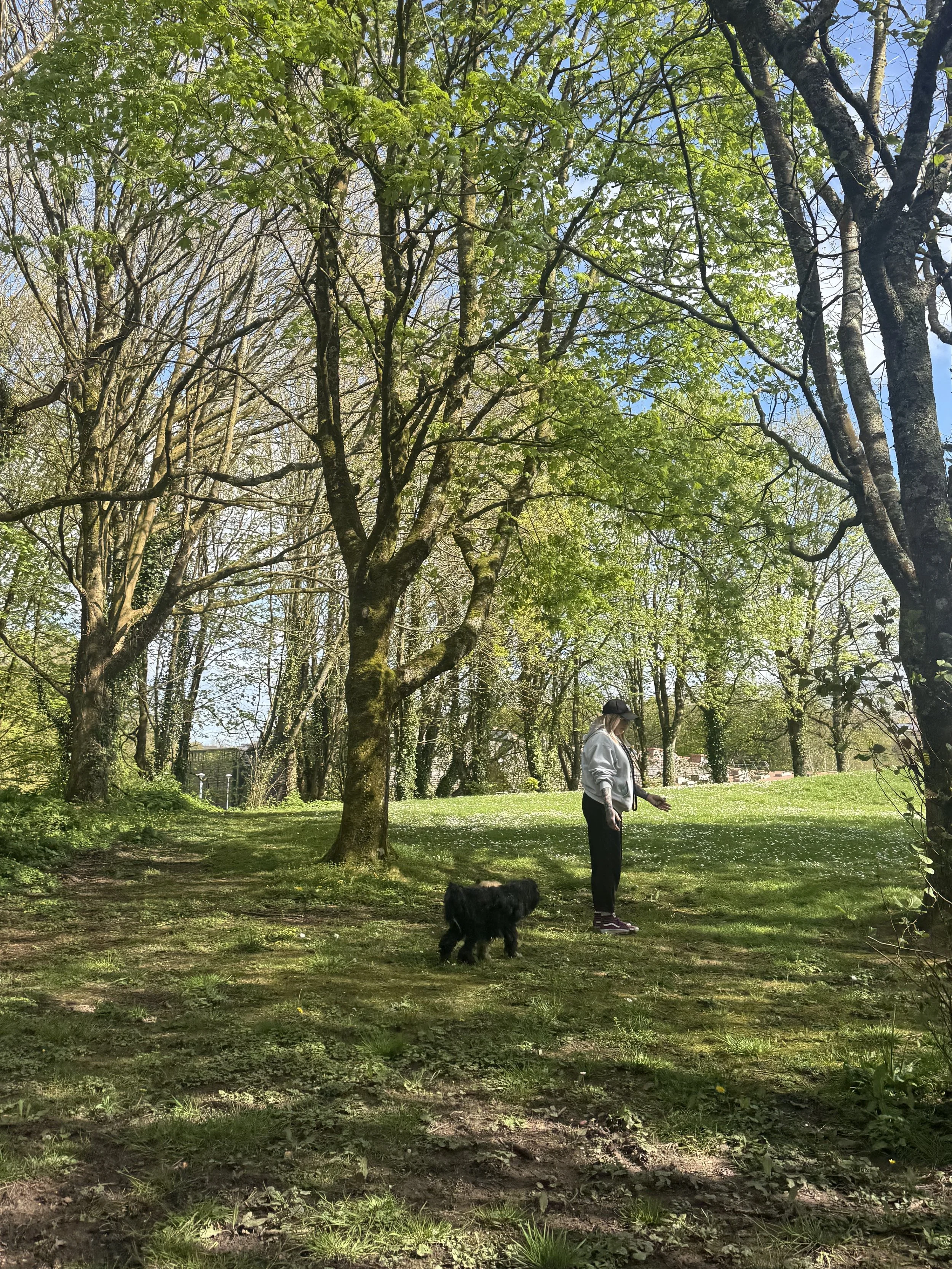
It's not just in your head: A major 2025 study of nearly 500,000 people found that living near parks and gardens is directly linked to healthier vitamin D levels."
For those of us in Northern Europe, where the winter sun is too weak to help, this isn't a minor issue. The same study highlights that greenspace may be a key public health tool to combat widespread deficiency.
This is a perfect example of how our environment acts as a health modifier. It's not about one magic pill, but about how our surroundings shape our daily habits and, ultimately, our biology
We all know the feeling. After a long, grey winter in Ireland , the first real day of spring arrives. The sun is out, the air is soft, and something in your chest loosens. You want to be outside. You want to roll up your sleeves and just stand there.
It turns out that instinct isn't just poetic. It's deeply biological. A major new study published this year has put hard numbers behind what many of us have felt: living near green space directly boosts your vitamin D levels. And for those of us in Northern Europe, where winter sun is too weak to help, this is a game-changer for how we think about our health.
🌿 The Paper That Connected Dirt to Vitamin D
A 2025 study led by Chinonso Odebeatu and colleagues, published in the International Journal of Hygiene and Environmental Health (Impact Factor 6.0), looked at nearly 500,000 people from the UK Biobank. That's a massive, Northern European dataset people living at latitudes very similar to Ireland's.
The researchers measured two things:
Residential greenspace (using satellite data to see how much vegetation was around each person's home).
Blood levels of vitamin D (the 25(OH)D biomarker).
Then they controlled for everything else that could matter: age, season, weight, wealth, even how much exercise people did. And the result was clear and consistent:
People living in greener areas had significantly higher vitamin D levels.
The relationship was "dose-response," meaning the more green space around you, the better your vitamin D status. This wasn't a small fluke. This was a pattern across half a million people.
🧠 How Green Space Acts as a Health Modifier
Here is why this paper is so useful. It doesn't just say "green space is good for you." It identifies a specific, measurable mechanism: greenspace encourages time outdoors in sunlight, which drives vitamin D synthesis.
Think of it as a chain reaction:
More trees, parks, and gardens near your home → you are more likely to step outside, take a walk, garden, or sit on a bench.
That outdoor time exposes your skin to UVB sunlight → your body produces vitamin D.
Higher vitamin D levels → better bone health, immune function, and emerging evidence for improved mood and mental health.
This is what public health researchers call a health modifier. Your environment doesn't just influence you vaguely; it physically changes your biology.
🇮🇪 Why This Matters Right Now in Ireland
Here is the part I want you to really hear. In Ireland and across Northern Europe, the sun's angle from October to March is too low for your skin to make any meaningful vitamin D. You could stand outside all day in January, and you'd get cold, but you wouldn't produce vitamin D.
That means spring right now is our critical window. From around April to September, the sun is high enough. But here is the catch: you have to actually be outside, with skin exposed, during the middle part of the day.
This is where the Odebeatu paper becomes a call to action. The researchers explicitly note that greenspace facilitates "controlled sun exposure." They aren't talking about sunbathing until you burn. They are talking about the simple, repeated act of being in nature, with your arms and lower legs uncovered, for short periods around midday.
☀️ The "Limbs Out" Rule for Maximum Absorption
If you want to translate this science into action, here is the practical tip:
For the next six months, aim for 10–20 minutes of midday sun exposure on your forearms and lower legs, several times a week.
Why limbs? Your arms and legs have a lot of surface area and are usually easy to uncover. The torso can also work, but limbs are more convenient.
Why no sunscreen? Sunscreen blocks UVB, which is the exact wavelength you need for vitamin D. After 10–20 minutes, you can apply sunscreen to prevent burning.
Why midday? That's when UVB rays are most available. Early morning and late afternoon sun won't do the trick.
And here is the beautiful synergy with the research: you don't have to force yourself to do this as a chore. Just go outside. Walk to a local park. Sit in your garden. Have your lunch on a bench. The greenspace itself will nudge you to stay a little longer.
💚 The Mental Health Bonus
While the Odebeatu paper focused on vitamin D, the broader science is clear: low vitamin D is linked to higher rates of depression, especially seasonal affective disorder (SAD). And time in green space independently improves mood, reduces stress, and lowers cortisol.
So when you step outside this spring, you aren't just topping up a vitamin. You are:
Lowering your stress hormones.
Boosting your mood through light exposure.
Letting your skin make a hormone (that's what vitamin D really is) that protects your brain and bones.
🪴 What You Can Do Tomorrow
Map your nearest green space. Find a park, a community garden, or even a tree-lined street.
Schedule a 15-minute "limbs out" break. Roll up your sleeves, pull up your trousers, and just stand or walk between 12 PM and 2 PM.
Don't hide from the sun. We've been taught to fear it. But short, sensible exposure is medicine, not poison.
Consider a vitamin D supplement in winter. From October to March, no amount of Irish cloud-watching will produce vitamin D. The paper doesn't argue against supplements it argues for adding green space to your toolkit.
🌱 The Takeaway
The Odebeatu paper gives us permission to trust an ancient instinct. Your body knows it needs sunlight. Your mind knows it needs trees and grass. The science now shows that those two needs are connected by a single, measurable thread: vitamin D.
This spring in Ireland, don't just admire the green from your window. Go out into it. Roll up your sleeves. Let the light touch your skin. You aren't being lazy or indulgent. You are doing exactly what half a million people in the data showed works.
Your health modifier is waiting. It's called your local park. Use it.
This blog post is based on Odebeatu, C. C., et al. (2025). "The role of greenspace in vitamin D status: cross-sectional, observational evidence from the UK Biobank." International Journal of Hygiene and Environmental Health, 264, 114502.